Adhesion
Adhesion test for immediate results as well as part of a long term maintenance programme.

- In house engineering and production
- World-wide project experience
- Standard and custom designed systems
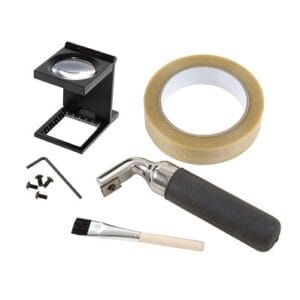
Adhesion testing equipment
Assuming that the initial steps in the blasting and painting process have been carried out correctly, the substrate should be blast cleaned to the required standard of cleanliness and surface profile. This preparation is achieved using appropriate blasting equipment, ensuring that contaminants are removed and that the surface provides optimal conditions for coating adhesion.
Following surface preparation, the coating should be applied using suitable painting equipment, at the specified film thickness and in accordance with the coating manufacturer’s requirements. Both blasting and painting operations must take place under controlled climatic conditions, preventing unwanted condensation on either the substrate or the freshly coated surface. Failure to control temperature, humidity or dew point can directly compromise coating performance.
Verifying Coating Adhesion After Blasting and Painting
Once surface preparation and coating application are complete, the next critical step is to verify that the coating is correctly adhered to the substrate. If adhesion is insufficient, the coating system may suffer premature failure, leading to corrosion, rework or reduced service life.
Adhesion testing provides confirmation that the combined blasting and painting process has delivered the required quality. There are two basic types of adhesion test: destructive and non-destructive. Destructive tests provide a direct measurement of bond strength, while non-destructive adhesion tests allow verification without damaging the coating. In addition to confirming job completion, non-destructive testing can also be incorporated into a long-term inspection and maintenance programme, supporting ongoing asset integrity and coating performance.