Sandblasting / Abrasive Blasting
Airblast recognises the needs of the surface treatment industry. Our sandblasting machines and sandblasting equipment offers all the features that the professional user requires.


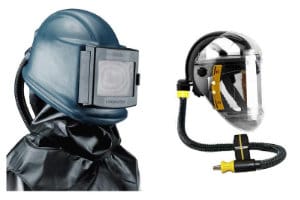


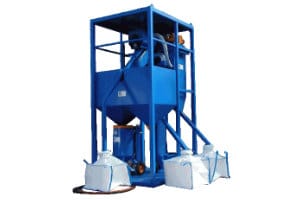

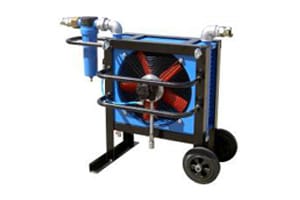
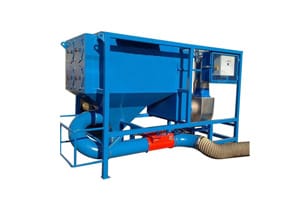


- In house engineering and production
- World-wide project experience
- Standard and custom designed systems
Abrasive Blasting Industrial Surface treatment
Sandblasting, also known as abrasive or grit blasting, is a widely used surface preparation technique. In practice, the process uses a stream of abrasive material that strikes the surface at high speed. As a result, operators can clean, smooth or roughen a surface depending on the application. Industries commonly use abrasive blasting for cleaning surfaces, creating an anchor profile, deburring, desanding and achieving a specific surface finish. In addition, the process prepares the surface to ensure proper coating adhesion.
How does abrasive blasting work?
Abrasive blasting uses compressed air, water or a rotating wheel (turbine) to propel abrasive particles towards the surface. When these particles impact the surface, they actively remove contaminants such as rust, old paint and mill scale. At the same time, they create an anchor profile that allows coating systems to adhere properly. Furthermore, abrasive blasting can smooth surfaces, strengthen steel through peening, or carefully remove surface contaminants.
There are several abrasive blasting methods, each suited to specific applications. The most common methods are outlined below.
Compressed air blasting
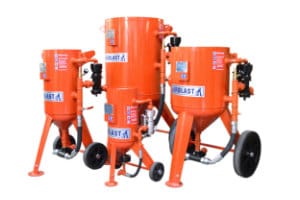
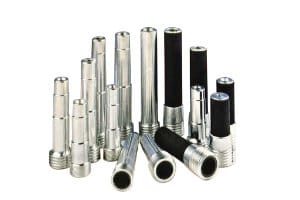
Compressed air blasting cleans, smooths or shapes a surface by directing abrasive blast media through a stream of compressed air. This method typically requires a blast pot, blast hose, blast nozzle, compressor and appropriate protective clothing for the operator. As a result, it remains one of the most flexible and widely used blasting techniques. This method can be applied in different setups, depending on the working environment.
Open blasting
When abrasive blasting takes place outdoors or on location, such as on ships, bridges, offshore platforms or other exposed structures, open blasting is often used. In these situations, environmental control becomes critical. Therefore, operators can use dustless blasting machines to limit environmental impact. These machines collect dust and recover the used abrasive for reuse. As a result, the process becomes more efficient and more cost-effective.
Personalised blasting rooms
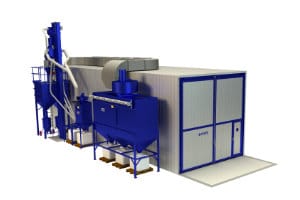
In a personalised blast room, the system contains and collects dust within a controlled environment. At the same time, the blast media can be recycled. Consequently, companies reduce abrasive consumption and lower disposal costs for spent media.
Moreover, recyclable abrasives generate less dust, which improves visibility for the blaster. In addition, blast rooms allow full automation through robotic blasting systems. Especially when large surfaces require continuous blasting, automation delivers a short return on investment.
Cabinets made for blasting
When blasting smaller workpieces, operators typically use a blast cabinet. In this setup, the operator stands outside the cabinet and manipulates the blast nozzle through sealed gloves to process the parts inside. Airblast offers both pressure blast cabinets and vacuum injection blast cabinets. Furthermore, these cabinets can be fully automated. As a result, manufacturers can reduce labour costs when blasting large volumes of parts in a factory environment.
Blasting with Vacuum Recovery
Vacuum blasting combines traditional compressed air blasting with an integrated vacuum recovery system. This method cleans, strips and prepares surfaces while significantly reducing dust and debris.
Because the system automatically separates abrasive media from dust and loose particles, operators can reuse the media multiple times. Consequently, this reduces both abrasive consumption and disposal costs. Although vacuum blasting operates more slowly and offers less versatility than standard compressed air blasting, it eliminates airborne dust and enables abrasive reuse.
In addition, powerful machines such as the AB1070 can operate with cost-efficient steel grit. This further lowers abrasive consumption and supports efficient, controlled blasting operations.